"Fails to capture the woman I knew": Review of 'Margaret Thatcher: Life After Downing Street'
October 2000: Baroness Thatcher arrives for work at her London office on her 75th birthday | Image by: Independent / Alamy
4 min read
Although a fascinating and illuminating read, Peter Just’s book is a missed opportunity
Peter Just’s book on Margaret Thatcher is well-timed to coincide with the centenary of her birth and is a useful addendum to Charles Moore’s authorised biography, now being published as a single volume. Having worked as political secretary to the prime minister for the last three years of her premiership, I was the only member of the No 10 staff to leave with her and to continue working for her until my election 18 months later. I was therefore somewhat surprised not to have heard from the author until he wrote to me after his book was finished and was about to be published.
As expected from a student of Lord (Philip) Norton, the book is thoroughly researched and draws extensively on diplomatic telegrams (diptels) and government papers, existing published works and material in the Thatcher Archive at Churchill College, Cambridge.
It provides fascinating insights into how ministers and officials in John Major’s government, and subsequent ones, viewed her not-always-helpful interventions in matters of public policy at home and abroad.
Many clearly believed that she should have simply left the political stage but such an expectation was never realistic. The book does not dwell on the manner of her departure from office and yet the brutality of this long influenced her attitude and guaranteed that she would not meekly creep away.
As an academic work recording her continuing influence and political activity, this book is both enjoyable and illuminating
Having been the consummate conviction politician, she was always going to continue to express her views. This was particularly the case on those subjects about which she felt most strongly such as the EU and the Bosnian War – perhaps as much because of her disagreement with government policy as in spite of it.
She also had a ready audience. Virtually every visiting foreign leader asked to have a meeting with her as part of their programme. As one of the 1992 intake, my fellow new Conservative MPs told me how keen they were to meet the leader of their party who had done the most to draw them into politics. Consequently I organised several drinks at her home in Chester Square at which she was happy to talk to them; the view of John Major and others that this was her trying to persuade them to oppose his European policies was untrue and unfair.
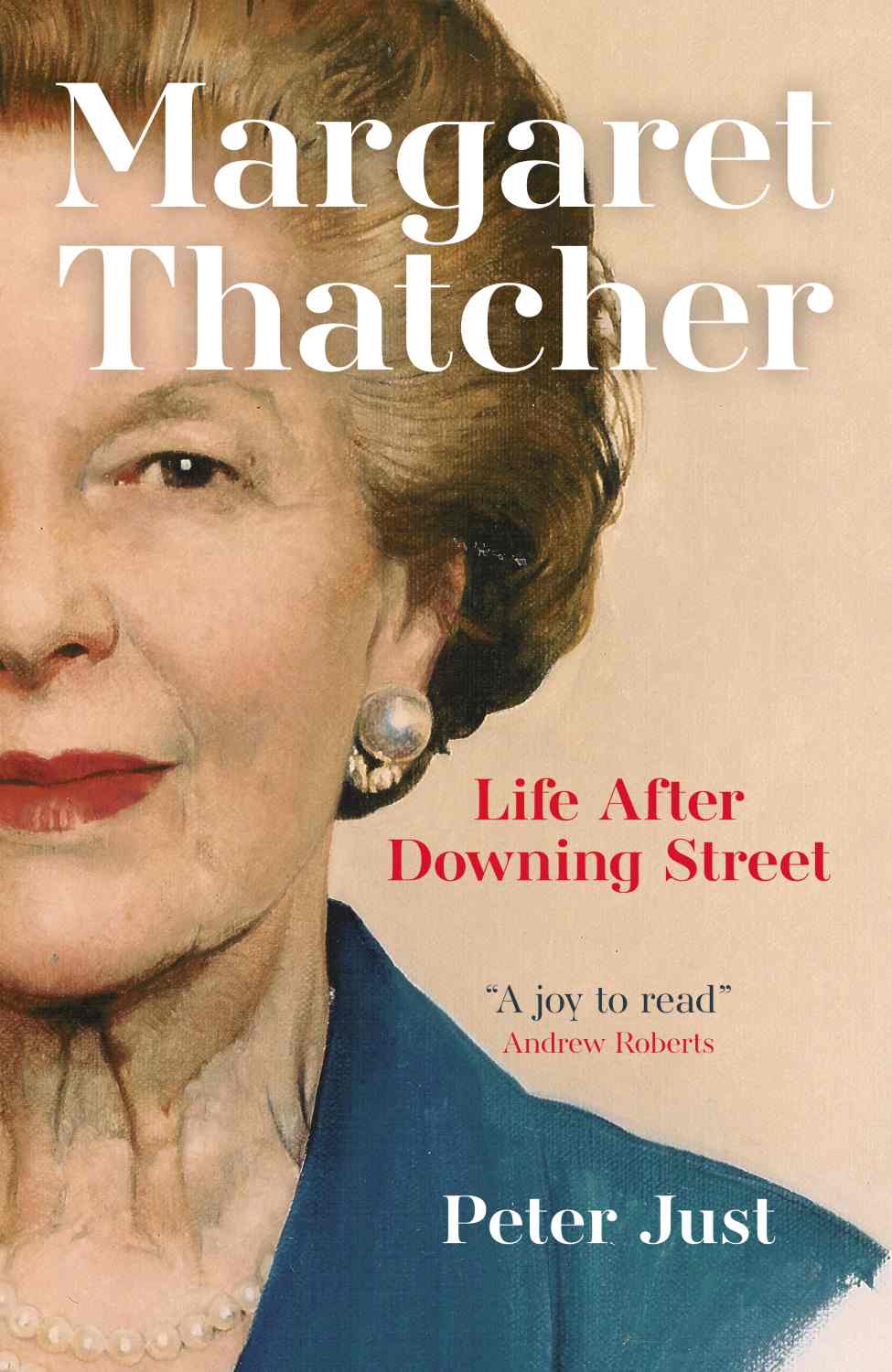 Where the book is weak is about the Margaret Thatcher that I knew. The person who had most influence on her – her husband, Denis – hardly gets a mention. Yet one of the results of her stepping down was that they were together far more than at any previous time, not always harmoniously. Another figure who was among those closest to her throughout – her PA Cynthia Crawford – is mentioned just once while Sir Mark Worthington, who succeeded me as her private secretary and gave devoted service until her death, gets just two (although he also appears in the acknowledgements). The list of those whom the author does record as having interviewed includes almost none of her friends and instead a lot of her critics, none of whom were ever sympathetic to her beliefs.
As an academic work recording her continuing influence and political activity, this book is both enjoyable and illuminating. The author is generally balanced and fair, while also clearly a fan. However, it is a missed opportunity to describe the real Margaret Thatcher who those of us closest to her knew. That is a gap in the literature that I may in time try to fill.
John Whittingdale is Conservative MP for Maldon
Margaret Thatcher: Life After Downing Street
By: Peter Just
Publisher: Biteback
