The Labour leadership should 'read this book and learn lessons': Jon Cruddas reviews 'Tony Blair'
April 2002, Crawford Texas: Tony Blair and George W Bush | Image by: Alamy / Bob Daemmrich
3 min read
A significant re-examination of the Labour leader’s legacy, Steve Richards’ insightful book is worth buying just for the chapter looking at Tony Blair’s self-entrapment over Iraq
In the years immediately after leaving office, the legacy of departing leaders is too often shaped by their last true defenders, usually those present on the final death march. Recent political history is framed by some of the most blinkered adherents of what the leader had become – rather than what they had once been, or promised to be. This process drains complexity and nuance; it dilutes and simplifies the political character in question. This is certainly true of both Margaret Thatcher and Tony Blair. In the latter’s case, diehard supporters have shrunk what Labour’s most electorally successful leader once was.
Yet Blair has colluded in this process of diminishment, to manufacture a successful, highly lucrative global brand. The “smiling public man” we see today, to borrow from WB Yeats, has consciously sought to both obscure and redraw his political character. His autobiography, A Journey, is deliberately elusive; in part a sad disguise where the author refuses to discuss his early political, philosophical and spiritual motivations. Nearly 30 years on, we should reassess his legacy. Not least because today’s politicians – Keir Starmer in particular – have learnt the wrong lessons from Labour’s recent history.
In a short, thoughtful biography Steve Richards has begun this necessary political revisionism. Blair’s paradoxical character – such as being both messianic yet pragmatic, where supposed strengths disguised real weakness, erecting a form of robust leadership premised on deference to elites, and making the cautious seem exciting – is subtly drawn out in this brief yet significant book. Consequently, Blair emerges as what he was and is today, a more interesting figure: complex, brilliant yet uncertain, conflicted.
Blair’s paradoxical character is subtly drawn out in this brief yet significant book
Throughout, Richards offers real insight – for instance when inspecting the escalating tensions with Gordon Brown, their ideological undercurrents and tragic consequences. My personal favourite is when the author draws parallels between the “tonal evangelism” of Blair, the converted Anglican, and the radical nonconformity of Tony Benn, Labour’s great socialist preacher, through their shared melodious speech patterns.
However the book hinges on Blair’s self-entrapment over Iraq. This one chapter takes up nearly a third of the book and is worth buying for these pages alone. Richards roots Blair’s tragic path not in any messianic neo-con conversion but in pragmatic domestic concerns, of successive Labour defeats in the 1980s intertwined with perceived weaknesses over defence, of CND and Michael Foot, Thatcher’s Falklands bounce, Ronald Reagan’s White House snub of Neil Kinnock and the overarching necessity of maintaining close relations with the US president.
 Richards relitigates the Iraq story by way of Blair’s psychological dilemmas, played out in early support for Bill Clinton’s pointless rockets against Saddam Hussein, the hastily put together Chicago doctrine of 1999, the Kosovo conflict, the George Bush administration’s pivot from Afghanistan to Iraq, the necessary removal of Robin Cook from the Foreign Office and how, in the spring of 2002, Blair finally ran out of road in Crawford, Texas.
Coming to the end of his time in office, Blair urged Labour to be “free from doctrine”, echoed in Starmer’s first address on the Downing Street steps when he said his government would be “unburdened by doctrine”. Labour’s current and future leadership should read this book and learn lessons, return to what Blair once was – and not simply echo what he became.
Jon Cruddas is former Labour MP for Dagenham and Rainham
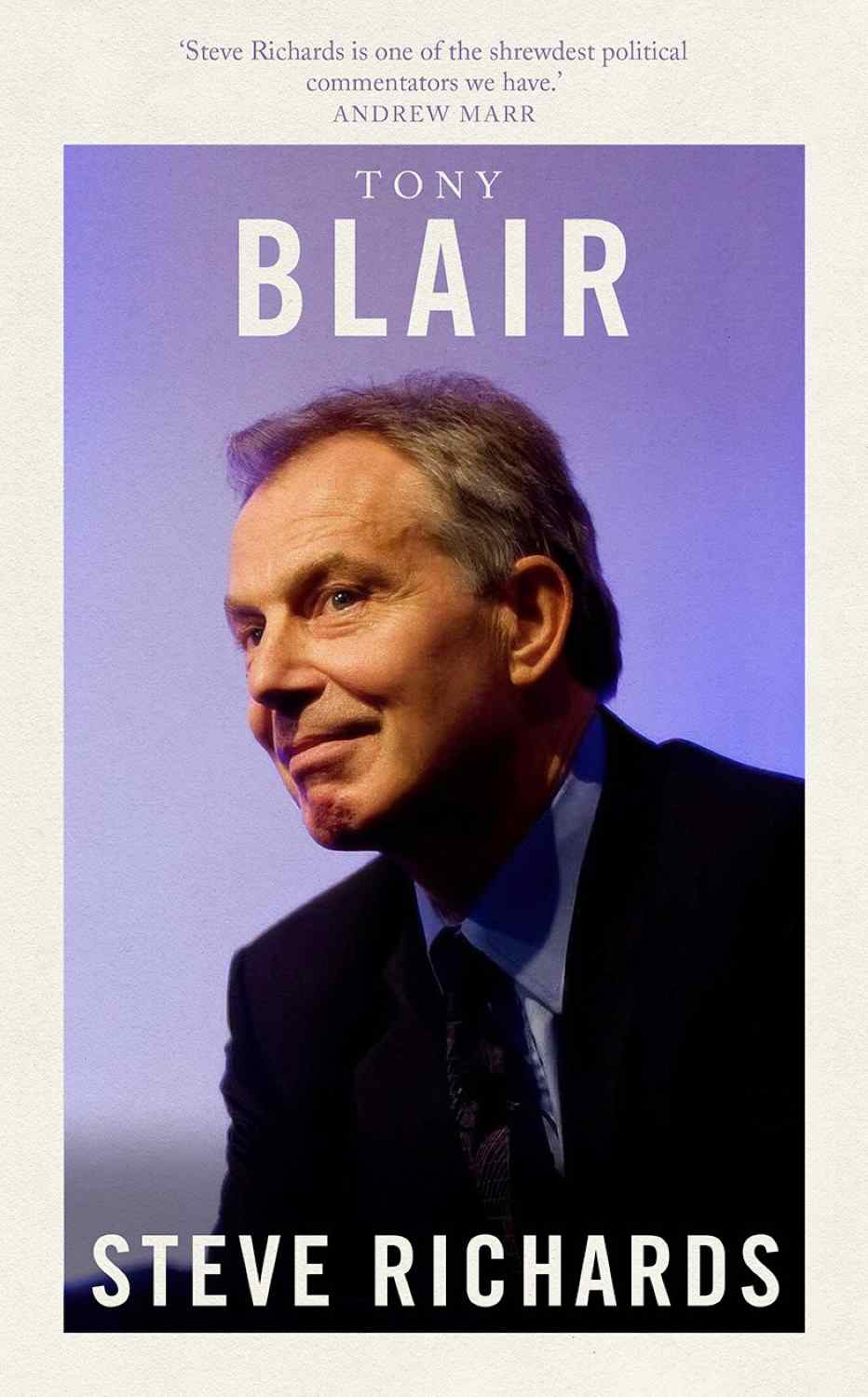
Tony Blair: The Prime Ministers Series
By: Steve Richards
Publisher: Swift Press
