"Moving and extraordinary": Lord Clancarty reviews 'Lee Miller'
Installation photography of Lee Miller at Tate Britain: 2 October 2025 – 15 February 2026. © Lee Miller Archives, England 2025. All rights reserved. leemiller.co.uk. Photo © Tate (Sonal Bakrania)
4 min read
Take the short walk down to Tate Britain to view the photography of the remarkable Lee Miller – a woman whose life and work presents hugely important lessons for our own uncertain age
The American photographer Lee Miller led many artistic lives: model, muse, surrealist, fine art photographer, fashion photographer, creative director, war correspondent and finally gourmet cook and occasional photographer of artist friends. A new exhibition at Tate Britain explores many of these lives as a way of demonstrating her remarkable contribution to mid-20th-century culture. But the trajectory of Miller’s life is also a record of the rise of fascism and resulting war in Europe with its catastrophic consequences, presenting hugely important lessons for our own uncertain age.
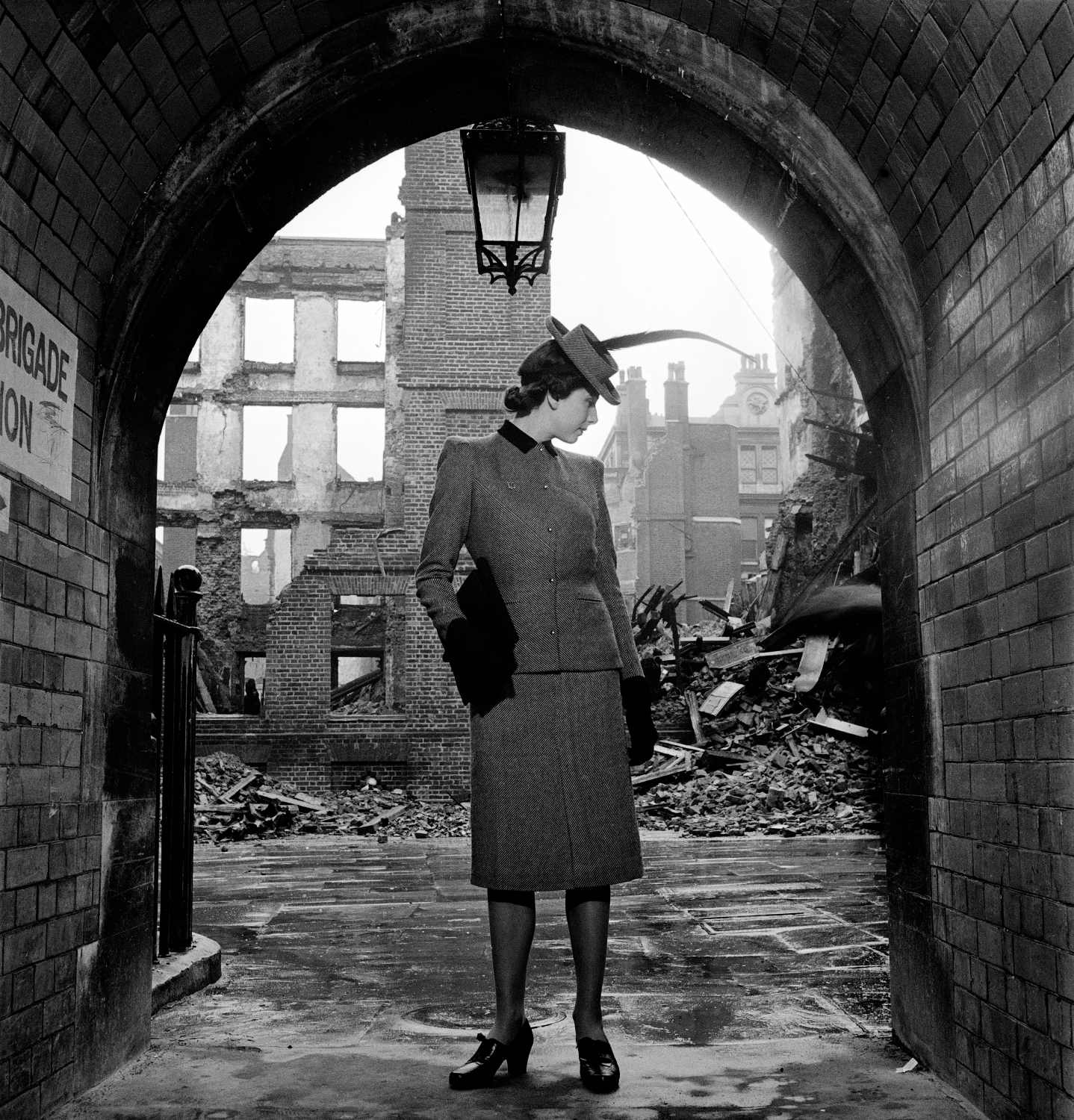 London 1941: Model Elizabeth Cowell wearing Digby Morton suit
© Lee Miller Archives, England 2025. All rights reserved. leemiller.co.uk
This is rightly a big exhibition, although the best work is packed into a mere 15 years or so between 1929 and 1945, kicking off at the point Miller decided to apprentice herself to the surrealist Man Ray in Paris, and culminating in the extraordinary and distressing documentation of the end of the war which she witnessed at Buchenwald and Dachau.
Miller had a knack of seeing a picture larger than the more obvious one
Miller’s collaboration with Man Ray produced the remarkable ‘solarised’ photographs, the result initially of a print being accidentally re-exposed to the light. The surrealists’ taste for the macabre (severed breasts served up on dinner plates) no doubt stood her in good stead for the war years.
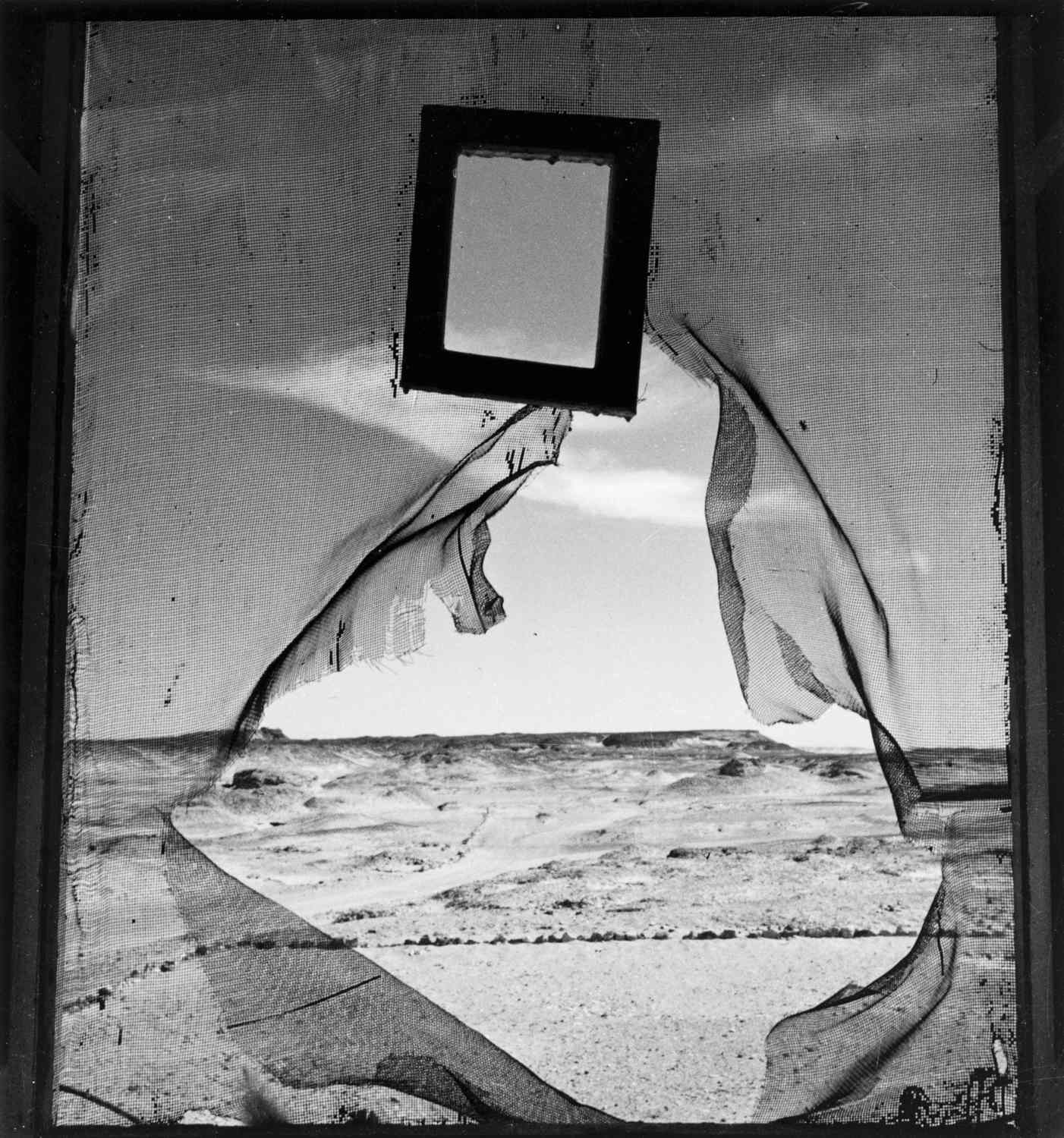 1937 Portrait of Space, Al Bulwayeb, near Siwa
© Lee Miller Archives, England 2025. All rights reserved. leemiller.co.uk
Miller had a knack of seeing a picture larger than the more obvious one. An early example is Portrait of Space, Al Bulwayeb, near Siwa (1937) showing an empty desert glimpsed through a torn mosquito net. Non-conformist chapel, Camden Town, London (1940) taken during the Blitz has an avalanche of masonry spilling out of the chapel’s entrance. One of her most effective photographs was made by her climbing into a railway carriage full of dead prisoners at Dachau and pointing the camera out at the American soldiers looking in. If the soldiers stand in for us, it begs the question whose point of view is actually being represented here?
The photograph of Lee Miller in Adolf Hitler’s bath in his apartment in Munich, a collaborative work between herself and fellow photojournalist David E Scherman, is justly famous. She wrote: “He’d been an evil machine-monster all these years, until I... ate and slept in his house. He became less fabulous and therefore more terrible”.
 Interestingly, Lee Miller did not return home immediately after the war and some of the most moving photos in the exhibition are from its aftermath. She was hugely disparaging of the German people for allowing the Holocaust to happen, although her pictures of collaborators and German people amongst the ruins tell a more ambivalent story.
It is clear that for Miller the war did not end in 1945 – it was with her to the end of her life. The last room in the exhibition is devoted to photographs of artist friends taken after the war, often at the home she made with artist Roland Penrose in Sussex.
During her war years, Lee Miller filed stories with her pictures and these have an enormous immediacy to them. I have just bought Lee Miller’s War: Beyond D-Day (Thames and Hudson) and it is a great read.
Earl of Clancarty is a Crossbench peer
Lee Miller
Curated by: Hilary Floe & Saskia Flower
Venue: Tate Britain until 15 February 2026
